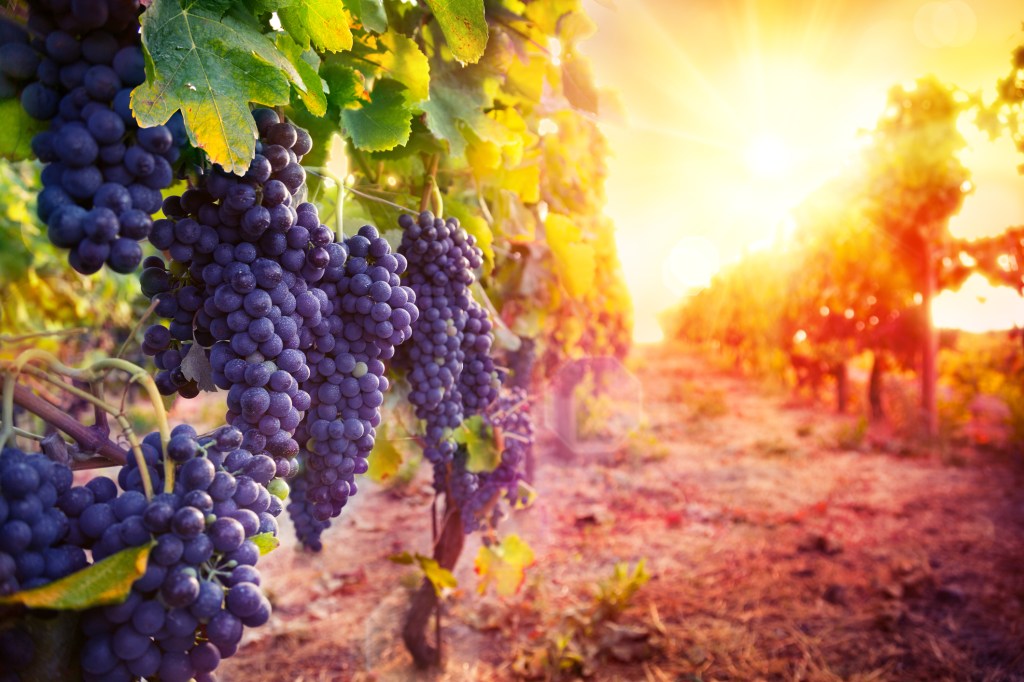
Isn’t it interesting that the very first command God gave to humans immediately after creation was the command to be fruitful? “And God blessed them [granting them certain authority] and said to them, “Be fruitful, multiply, and fill the earth” (Genesis 1:28a, AMP).
God’s desire for us to be fruitful did not stop there though. However, the fruitfulness He requires takes various dimensions. While the initial command to be fruitful likely referred to having children, there are other dimensions of fruitfulness in Scripture. One of the key dimensions of fruitfulness is producing evidence of our faith. This is one of those times when the saying ‘seeing is believing’ is appropriate. How can God, as well as those around us, see the evidence of our faith? The primary way our faith is made manifest is when we bear the fruit of the Spirit – Love, joy, peace, patience, kindness, goodness, faithfulness, gentleness, self-control (Galatians 5:22-23b).
Remember that in Genesis 1:24, part of the command to be fruitful was that the fruitfulness be according to one’s kind. If I were to apply that here, a good question to ask may be: As disciples of Jesus, how much of ‘our kind’ are we producing, as per the Great Commission (Matthew 28:19-20). Another question is ‘If more people were like me, would God be glorified, and would the world be a better place?’ Our sincere answers to these questions can reveal how fruitful we are.
The parable of the talents in Matthew 25:14-30 also teaches us that God can measure fruitfulness by how much we bring forth or multiply what He has given us – whether that be time, resources, skills, talents. Is what God has given us buried in a ground somewhere? Is it being used for our glory? Or, is it being used for His glory as it should be?
Fruitfulness also goes beyond how we use our resources. It encompasses how much of our God given mandate or purpose we are fulfilling, and how we are acting out our calling – whether that be as a pastor, a parent, a person on the street. Are we bearing fruit in the area where God has called us and positioned us in? It is important to note that it is not always about the amount of fruit we bear, as we learnt from the story of the widow’s mite (Luke 21:1-4). Rather it factors in how much of ourselves we have truly devoted to bearing quality fruit for God.
God makes it very clear in His Word that He does not want us to be bare branches. He wants us to be humble branches, bowing with the weight of the fruit we are growing. Bare branches do not glorify God. In fact when Jesus saw a tree not bearing any fruit, he cursed it. It is interesting because Jesus was someone who went about blessing people, but the one thing he cursed was something that was unfruitful, the fig tree (Matthew 21:18-22). This gives us an insight into how God feels about unfruitfulness. The parable of the talents further illustrates how God feels about disobedience to the command “be fruitful and multiply.” Matthew 3:9-10 (BSB) states, “And do not presume to say to yourselves, ‘We have Abraham as our father.’ For I tell you that out of these stones God can raise up children for Abraham. The axe lies ready at the root of the trees, and every tree that does not produce good fruit will be cut down and thrown into the fire.” John 15:2 also reminds us that unfruitful branches will be cut off from the Vine.
The main reason why we should be fruitful is not merely for our own sake, but as Jesus said in John 15:8, “This is to my Father’s glory, that you bear much fruit, showing yourselves to be my disciples.” The evidence of us being disciples of Jesus is therefore the fruit hanging from our branches.
Fruitfulness leads to joy too! John 4:36 (NLT) notes, “The harvesters are paid good wages, and the fruit they harvest is people brought to eternal life. What joy awaits both the planter and the harvester alike!” As fruit bearers, we bring joy to ourselves and to Heaven (Luke 10:17, 15:7, Psalm 126:5-6).
Fruitfulness is a sign of other things as well. Luke 21:29-30 (NKJV) notes, “Then He spoke to them a parable: “Look at the fig tree, and all the trees. When they are already budding, you see and know for yourselves that summer is now near.” Our fruitfulness can be a sign that we are abiding in Jesus, and that the Kingdom of God is near.
It is also a sign of our leadership ability. I was reading the story of the Lion King to my kids recently, and we got to the part where Scar took over the beautiful, lush Pride Lands. Sadly, under his leadership, it turned into a barren wasteland. The land was gradually dying because of bad leadership. It made me think, am I turning a beautiful lush land God has given to me into a barren one? What kind of leadership am I providing to my ‘land’, whether that is myself, my family, my calling, my work? The question then arises, How can I make my land and my soil more fruitful? I will attempt to answer it below.
Dying
It almost seems ironic that to be fruitful, death needs to happen. However, in the words of Jesus, “Truly, truly, I say to you, unless a grain of wheat falls into the earth and dies, it remains alone; but if it dies, it bears much fruit” – John 12:24 (ESV). Just think of how much fruit Jesus’ death has brought about! While we don’t need to die on the cross again (thank God for that), fruitfulness will require killing our fleshly desires. It won’t be easy, but the more we do so, the more fruitful we can be. As Romans 8:13 (CJB) notes, “For if you live according to your old nature, you will certainly die; but if, by the Spirit, you keep putting to death the practices of the body, you will live.” This will not be a one-off task though. As Paul said in 1 Corinthians 15:31b, “I die daily.” This means we need to make a conscious decision every day to kill our flesh and revitalise our Spirit man.
Pruning
Jesus said “I am the true grapevine, and my Father is the gardener. He cuts off every branch of mine that doesn’t produce fruit, and He prunes the branches that do bear fruit so they will produce even more” – John 15:1-2 (NLT). Pruning makes us more fruitful and more beautiful, the kind of beauty that attracts even more potential harvest. Just like the small mustard seed that became the largest of all garden plants, growing long branches and allowing birds make nests in its shade (Mark 4:30-32). The good news is that if we submit wholly to God and allow Him to prune us, we can rest assured that He knows the right amount of pruning required. God is a Master Gardener. He won’t take away too much or too little. The pruning may come in various forms, including trials, but knowing that God is the one in control of the overall process, and that He is the beginning and the ending, can bring great comfort (Matthew 10:29-31, Revelations 22:13).
Sacrificing
Recently, during a challenging time, I was reading my Bible and this verse struck me “Without oxen a stable stays clean, but you need a strong ox for a large harvest” – Proverbs 14:4 (NLT). Without these trials, we may have a clean stable, but no harvest. I realised then that I would rather have a large harvest than a clean stable, even though it would be at great cost and would require a lot of patience and cleaning up.
The more I reflected on that verse, the more I realised that to be fruitful, we will need to leave our stables, our comfort/safety zones, and get a bit of mud on us. This does not necessarily have to be physical move, though in some cases it may entail that, as in the case of Abraham (Genesis 12:1). However it does mean that we will have to make sacrifices. This could mean cutting our sleeping time short to make room for more praying time. Jesus spent a lot of time in prayer, sometimes a whole night. “Every day Jesus taught at the temple, but every evening He went out to spend the night on the Mount of Olives” (Luke 21:37, BSB). “In these days he went out to the mountain to pray, and all night he continued in prayer to God” (Luke 6:12, ESV). This was key to the exceptional fruitfulness of His ministry, even years afterwards.
Fruitfulness can also entail serving others, being willing to be brought low for the sake of drawing someone to Christ. Jesus washed His disciples feet, and swallowed all the insults and ridicule prior to and on the cross, for the sake of His Father’s will (John 13:1-17; Matthew 27:39-44).
In our mission to be fruitful, we may need to overlook offences, hold back sharp retorts or let go of the need to defend ourselves. We may have a strong defence/be innocent/realise it’s not fair, but if the Holy Spirit is asking us to, and we want to be fruitful, it is a sacrifice we must make. Jesus was the most innocent person to ever walk on this Earth and He understood this. “He was oppressed and He was afflicted, Yet He did not open His mouth [to complain or defend Himself]” – Isaiah 53:7a. “But he gave him no answer, not even to a single charge, so that the governor was greatly amazed” – Matthew 27:14.
Conversely, it could also mean speaking out, as led by the Holy Spirit, even when silence will keep us safe. This was the case for the Apostles, as recorded in Acts 5:40-42 (BSB): “They called the apostles in and had them flogged. Then they ordered them not to speak in the name of Jesus, and released them. The apostles left the Sanhedrin, rejoicing that they had been counted worthy of suffering disgrace for the Name. Every day, in the temple courts and from house to house, they did not stop teaching and proclaiming the good news that Jesus is the Christ.” We speak the truth, “even if our voice shakes*”, and we do so with grace (John 1:14). If we are led by the Spirit, then we can trust Jesus’ promise in Luke 21:14-15 (BSB), “So make up your mind not to worry beforehand how to defend yourselves. For I will give you speech and wisdom that none of your adversaries will be able to resist or contradict.”
Will the journey of fruitfulness be demanding? Oh yes. However, during such demanding times, we can hold on to the beautiful promise in Psalm 126:5-6 (NLT): “Those who plant in tears will harvest with shouts of joy. They weep as they go to plant their seed, but they sing as they return with the harvest.”
Abiding
Abiding in the Vine, Jesus, is what keeps us evergreen, ever fruitful. In John 15:3 (NLT), Jesus said “You have already been pruned and purified by the message I have given you.” He then goes on to say “Abide in me, and I in you. As the branch cannot bear fruit by itself, unless it abides in the vine, neither can you, unless you abide in me” (v.4, ESV). This means that we remain in Jesus, we dwell in Him. We make our home in Him and His home in us.
This comes through praying and asking God to fill us “with the knowledge of His will in all spiritual wisdom and understanding, so that we may walk in a manner worthy of the Lord and may please Him in every way: bearing fruit in every good work, growing in the knowledge of God” – Colossians 1:9-10 (BSB). We need spiritual wisdom and understanding to be abundantly fruitful. Human ideas may produce some fruit, but it will be minuscule compared to the bounteous fruit Godly wisdom can produce.
However, the kind of fruitfulness that Jesus desires requires us to remain in Him. As Jesus said, “Anyone who does not remain in me is thrown away like a useless branch and withers. Such branches are gathered into a pile to be burned. But if you remain in me and my words remain in you, you may ask for anything you want, and it will be granted!” (John 15:7, NLT). A similar promise is found in Psalm 37:4: “Delight yourself in the LORD, and he will give you the desires of your heart” (ESV). Or as the CEV puts it “do what the LORD wants, and He will give you your heart’s desire.”
We abide by spending time with God, seeking His presence, His will, His desires. We discover His will by studying His Word, asking Him and listening to Him. We seek to align our will to His in the place of prayer, and then we live out His will by obeying Him completely. We abide by maintaining a consciousness of our source, acknowledging that we are of little use when we are cut off from Him. If we have a very weak prayer life and are yielding little results, that is one sign of a branch that needs to be better connected to the Vine. I pray this is not the case for us.
As in the Parable of the Sower, our aim is to be good soil, the kind that bears much fruit from God’s Word that has been planted in us. We know that the seed we have received is premium quality. Therefore in order to maximise its yield, we ensure that the soil of our hearts and consequently our land is fruitful. We do this by putting into practice what we have learnt. Premium quality seed deserves premium quality soil.
Fruit-bearing
I realise this sounds like duplication. However the parable of the talents mentioned earlier reveals that the more fruitful we are, the more God entrusts to us, and consequently the more fruit we can bear. Luke 12:48 notes that “To whom much is given, much will be required.” As a personal example, I find that this really applies in my writing. The more I write, the more inspiration I have to write, and the more I want to write. Conversely, when I don’t write, it feels like my inspiration dries up and my zeal wanes. A quote attributed to Sarah Bernhardt captures this fairly well: “Life begets life. Energy begets energy. It is by spending oneself that one becomes rich.” In a similar vein, fruitfulness begets fruitfulness. Fruitfulness is an ongoing action that reproduces after its kind.
I need to add that there may be times in our lives where we may feel like we are being unfruitful due to circumstances that are out of our control. It can feel very frustrating when we really want to go out to bear much fruit, but are restricted by certain situations. Remember that Jesus is fully aware of our circumstances, and He takes that into consideration when assessing our fruitfulness. I’ll share an anecdote that I hope encourages you. While praying and worshipping during a Church service one Sunday, my eyes were drawn to a corner where some string light bulbs were bundled together and had become a tangled mess. For want of a better picture, imagine multiple earphones with fairy lights attached to them bundled together and entangled. What was amazing about those bulbs though was that even in their tangled mess, they were still shining brightly. So much so that my eyes were drawn to them, not minding their messy state. I learnt a lesson from that picture: Even in the mess, we can still shine for Jesus, we can still be fruitful. We can be fruitful, producing evidence of our faith, in every season of our life and every situation we find ourselves in… whether in the way we care for our children as a full time parent, or for a sick relative as a full time carer, as a colleague in an office, as a student in school, as a conscious patient in a hospital. I recently read this in a devotional by Candace Cameron Bure, “Your back may be bad, but if your mouth still works, you can tell your neighbour, your grandkids, your favourite waitress at the local restaurant about what a faithful friend Jesus is. You may be confined to a bed, but as long as you have a breath and a heartbeat, you can be praying for everyone you know. Life may have you on the side-lines, but you’re still on the team.” Isn’t that encouraging? As long as we are connected to The Vine, it doesn’t matter how lopsided or rough we think our branch is, we can still bear fruit!
As we reflect on this, I pray that we will be faithful fruit bearers, bringing forth delightful fruit, and giving glory to our loving Gardener as He tends to us with utmost care. Even in the dying, the pruning, the sacrificing, I pray that we will learn to trust the Vinedresser, for He is perfect in ALL His ways, and His wisdom and skill is unmatched. As we continually abide in the Vine, may our branches be full of luxuriant, life-giving fruit, bringing pleasure to the Vinedresser, refreshing famished passers-by, and ultimately drawing them closer to our Vibrant Vine and Worthy Vinedresser.
Image source here.

 LivLearns.Life
Leave a reply to Waiting For Perfection – livlearns Cancel reply