Have you ever read a verse multiple times and then all of sudden, seen it in a completely different light? And in a way that seems so obvious, you wonder how you could have ever missed it?
Recently, after listening to a teaching on this topic, I looked up Matthew 17:20 (ESV), and for the first time, I noticed a point in this verse that I had not really seen before. “He (Jesus) said to them, “Because of your little faith. For truly, I say to you, if you have faith like a grain of mustard seed, you will say to this mountain, ‘Move from here to there,’ and it will move, and nothing will be impossible for you.””
Let’s put this verse in context to better understand it…
“And when they came to the crowd, a man came up to him and, kneeling before him, 15 said, “Lord, have mercy on my son, for he has seizures and he suffers terribly. For often he falls into the fire, and often into the water. 16 And I brought him to your disciples, and they could not heal him.” 17 And Jesus answered, “O faithless and twisted generation, how long am I to be with you? How long am I to bear with you? Bring him here to me.” 18 And Jesus rebuked the demon, and it came out of him, and the boy was healed instantly. 19 Then the disciples came to Jesus privately and said, “Why could we not cast it out?” 20 He said to them, “Because of your little faith. For truly, I say to you, if you have faith like a grain of mustard seed, you will say to this mountain, ‘Move from here to there,’ and it will move, and nothing will be impossible for you.” (Matthew 17:14-20, ESV)
The story of this boy is one that I can relate to for various reasons, so suffice to say, I have read this passage a lot of times. Yet I still didn’t see it. Until recently, that is.
If you’ve listened to teachings on this verse, were you taught that you just need to have faith as small as a mustard seed to move a mountain? That seems to be how I’ve heard it interpreted a lot of times. However, re-reading this verse recently, a seeming contrast struck me. How can little faith move a mountain, when Jesus literally said at the beginning of the same verse, in response to the disciples asking Him why they could not heal the boy, that the very reason they could not do so was because of their little faith! If little faith could not heal the boy, how then could it move mountains? Was Jesus contradicting himself? Or, more probable, was there something else He was trying to communicate?
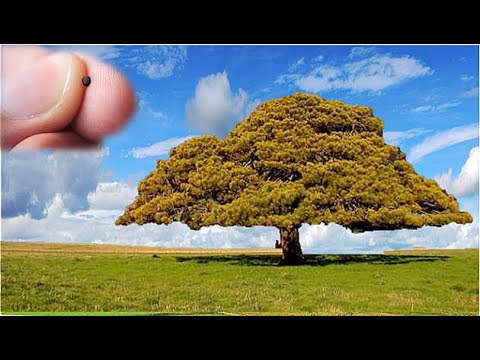
Let’s take a journey to the other time Jesus talked about the mustard seed. In Mark 4:30-32 (ESV), “And He (Jesus) said, “With what can we compare the kingdom of God, or what parable shall we use for it? It is like a grain of mustard seed, which, when sown on the ground, is the smallest of all the seeds on earth, yet when it is sown it grows up and becomes larger than all the garden plants and puts out large branches, so that the birds of the air can make nests in its shade.” This illustration is also recorded in Matthew 13:31-32.
What else do we know about the mustard seed tree? We already know a bit from what Jesus described, that the seed itself is tiny, but that it then grows into a large tree. To find out even more, I visited this site here, and have copied some interesting and important facts about the tree here: “Known as the Salvadora persica, it is a remarkable and multi-faceted plant… well-adapted to thrive in hot, dry climates, making it a resilient and hardy species”. It can grow up to 6 metres in height, has quite a gnarled and twisted trunk, and has various uses, such as for dental care (its twigs make a natural toothbrush) and for medicinal uses. Apparently research shows that it possesses antibacterial and antifungal properties.
The key facts of the tree that I found fascinating are that it has an exceptional ability to thrive in arid and semi-arid regions; can endure harsh conditions, including extreme temperatures and low water availability; it grows extremely fast, going from a tiny seed to a tree within a few years; is salt-tolerant and can grown in soils with high salt content (a lot of plants can’t survive soils like that); and because of its dense foliage and fruit-bearing capacity, it is a biodiversity hotspot, attracting birds, insects and small animals to it, and creating a mini eco-system around it.
Impressive plant right? So, when Jesus used the mustard seed as a metaphor for faith-moving mountains, was He referring to its size, or was He referring to its characteristics?
Given that He specifically said the problem was their little faith, I think it is safe to say the former was unlikely. Besides, that was not the only time He chastised them for their little faith (see Matthew 6:30; 8:26; 16:8; Luke 12:28). If little faith was sufficient, why would He do so?
As such, could it be that Jesus was instead saying that when faith in God thrives and continues to grow and bear fruit, even in the midst of extremely challenging circumstances, even in spite of salty soil, and is so beautiful that it not only bears fruit, but draws others closer, and even allows others to “nest in its shade” (i.e. to benefit from it, like the roof-opening friends of the man in Luke 5:17-20), then that is the kind of faith that moves mountains! And because Jesus had already outlined the characteristics of the mustard seed in another teaching, He might not have seen the need to go into detail again, possibly expecting them to remember what He had already described.
The misunderstanding of this verse may be down to the way Matthew 17:20 is translated in some translations like NIV, NLT, AMP. However if you read translations like ESV, KJV, NKJV, the translation is more accurate. The actual Greek word there is hōs (ὡς), which is more accurately translated as “in that manner”. Or simply “as”, which is what Google translated it to, when I used Google Translate.
As such, God is saying that when you continue to trust and have faith in Him even in the midst of challenges, growing in faith by reading, meditating, believing and declaring His Word, despite unfavourable conditions, then your faith is on the path to becoming the kind of faith that can move mountains.
No wonder James encourages us to “Count it all joy, my brothers, when you meet trials of various kinds, for you know that the testing of your faith produces steadfastness. And let steadfastness have its full effect, that you may be perfect and complete, lacking in nothing.” (James 1:2-4). It is the testing of our faith and the steadfastness it produces that gets us closer and closer to the point of perfection and completion.
If you are reading this and feeling like your faith is not quite there yet, you are not alone. I hope you can be encouraged by the fact that the mustard tree starts as a small seed, and one of its fascinating characteristics is how quickly it can grow. As such, if we even have that small seed of faith, that is the perfect starting point. However, it is important to acknowledge that Jesus does not expect us to stay at the starting point forever. If we are running a race, we would not expect to win if we just stayed stuck in the starting line while the race went on, would we?
And we are indeed in a race. As Hebrews 12:1 states, “Therefore, since we are surrounded by so great a cloud of witnesses, let us also lay aside every weight, and sin which clings so closely, and let us run with endurance the race that is set before us, looking to Jesus, the founder and perfecter of our faith, who for the joy that was set before Him endured the cross, despising the shame, and is seated at the right hand of the throne of God.”
God does not want us stagnant or stuck. No matter where we are in our faith journey, we can continue to grow. And in Colossians 2:6-7, we are told how we can grow our faith. “Therefore, as you received Christ Jesus the Lord, so walk in Him, rooted and built up in Him and established in the faith, just as you were taught, abounding in thanksgiving. See to it that no one takes you captive by philosophy and empty deceit, according to human tradition, according to the elemental spirits of the world, and not according to Christ.” (ESV).
Or as the AMP puts it, “having been deeply rooted [in Him] and now being continually built up in Him and [becoming increasingly more] established in your faith, just as you were taught, and overflowing in it with gratitude. See to it that no one takes you captive through philosophy and empty deception [pseudo-intellectual babble], according to the tradition [and musings] of mere men, following the elementary principles of this world, rather than following [the truth—the teachings of] Christ.”
Walking with Jesus, spending time with Him, in prayer, in His word, abiding in Him, fixing our eyes on Jesus irrespective of the waves and storms and distractions, not being deceived by false teachings, but following the truth of the teachings of Christ, and of course abounding in thanksgiving and overflowing with gratitude will help us to grow our faith till it becomes so big that others can even benefit from it, and so powerful that we start to see mountains in our lives and the lives of others moving out of the way.
This is what Jesus desires for us, faith that grows. If the point of the mustard seed faith was just the size, then why would we be encouraged to grow our faith? Not much use in growing something when a small amount of it is enough to move a mountain, is there?
This is why Jude 1:20 also exhorts us to build ourselves up in the most holy faith. And why 2 Thessalonians 1:3 (ESV)says, “we ought always to give thanks to God for you, brothers, as is right, because your faith is growing abundantly, and the love of every one of you for one another is increasing.” Or as the AMP puts it “We ought always and indeed are morally obligated [as those in debt] to give thanks to God for you, brothers and sisters, as is fitting, because your faith is growing ever greater, and the [unselfish] love of each one of you toward one another is continually increasing.” Imagine something being so important that it was considered a moral obligation to thank God for it!
When God gives us the gift of this mustard seed, He expects us to grow it, not leave it as is. And it brings Him great joy when we do so. The question is then, are we going to remain content with just the mustard seed, or are we going to work with Jesus to grow this wonderful tree in our lives?
I pray that as we reflect on this, God will give us the grace to hold fast, to abide, to grow in faith. I pray that we will also learn to rejoice when the trials come, knowing that they provide the building blocks we need to grow our faith, the storms that strengthen our mustard tree, and the winds that help spread seeds from our growing tree to new ground. May our hearts and eyes remain fixed on Jesus, our precious, powerful Saviour, knowing that He is the one who authors and perfects our faith. And may our little mustard tree continue to grow and grow, bearing much fruit, providing sumptuous shade to others, and moving those mammoth mountains. Amen and Amen!
Image Source Here.
Mustard Tree Facts Here.

 LivLearns.Life

Leave a comment