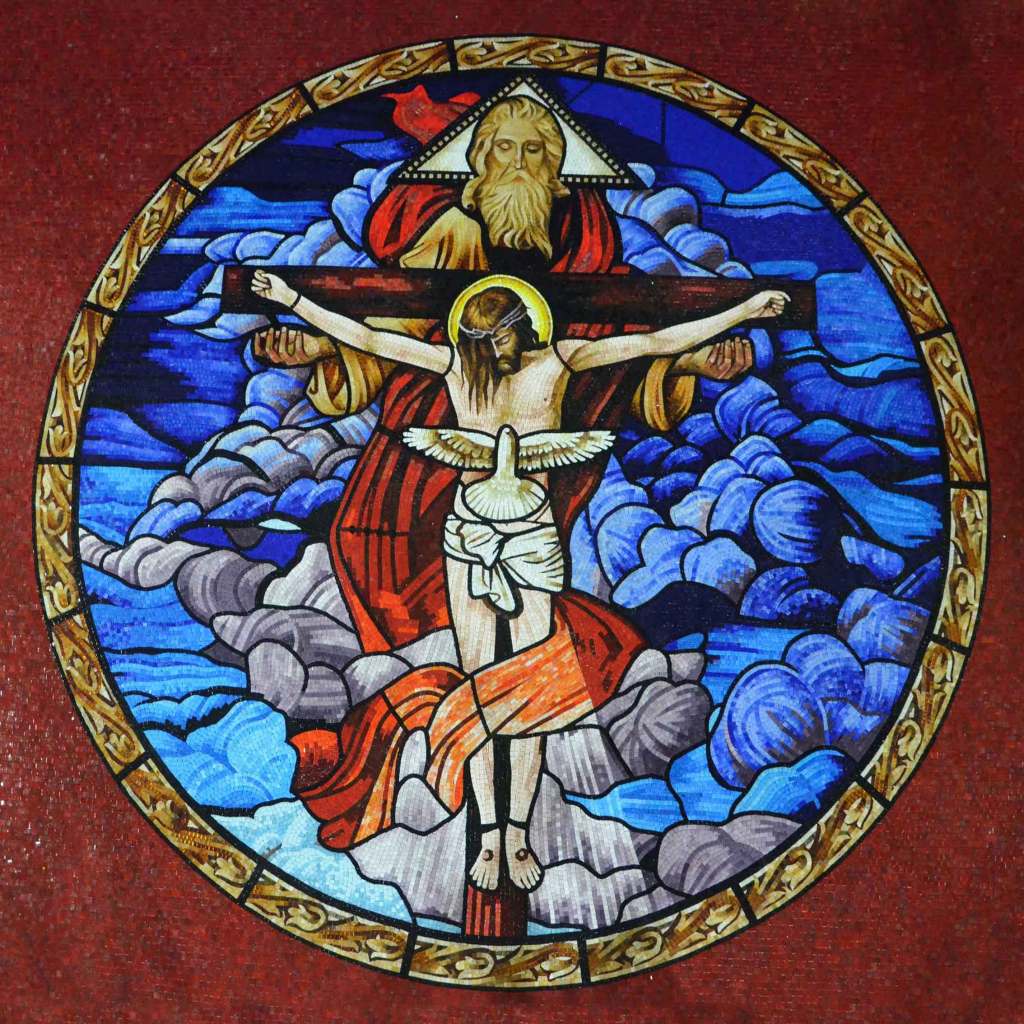
Do you believe God is a Good Father? As in really believe? If you are a Christian, you may think the answer is obvious. However, as obvious as you may think the answer is, I do wonder if in our heart of hearts, we truly believe this. Furthermore, if we say we do believe it, do our thoughts, words and actions reflect this belief?
Knowing and believing that God is a good Father is so fundamental to our faith. Why is this so? Because if for some reason we don’t truly believe that God is a good Father, it can have a detrimental impact on our faith, trust in, and intimacy with God. This inevitably means that walking with God and fully functioning in the way God intended us to will prove incredibly difficult.
Knowing and viewing life through the lens of God being a good father has had a significant impact on my Christian life. For how can I trust a God that is not good? And conversely, why would I not trust a God that I know, truly know, is good? As such, when I am conflicted about something that causes me to question God’s goodness, a question I ask myself is, ‘what would a good father do?’*
Recently, I was reflecting on Matthew 27:46-47 (ESV), which states “And about the ninth hour Jesus cried out with a loud voice, saying, “Eli, Eli, lema sabachthani?” that is, “My God, my God, why have you forsaken me?” And some of the bystanders, hearing it, said, “This man is calling Elijah.”
For most of my life, I had understood the prevailing narrative around this verse to be that God turned away from Jesus while He was on the cross. I have to say though that that understanding left me conflicted. Jesus was acting in full obedience to God, so why would God turn His face away from Jesus at essentially the most difficult time of His earthly life, when Jesus was doing exactly what God asked Him to do? Is that what a good father would do?
That was until Psalm 22 came into the picture for me, and I understood that Jesus was likely reciting this Psalm, a Psalm of David, which essentially describes a lot of what Jesus went through on the cross.
“My God, my God, why have you forsaken me?
Why are you so far from saving me, from the words of my groaning?…
14I am poured out like water, and all my bones are out of joint;
my heart is like wax; it is melted within my breast;
15 my strength is dried up like a potsherd, and my tongue sticks to my jaws;
you lay me in the dust of death.
16 For dogs encompass me; a company of evildoers encircles me;
they have pierced my hands and feet—
17 I can count all my bones—they stare and gloat over me;
18 they divide my garments among them, and for my clothing they cast lots.
19 But you, O Lord, do not be far off! O you my help, come quickly to my aid!
20 Deliver my soul from the sword, my precious life from the power of the dog!
21 Save me from the mouth of the lion! You have rescued me from the horns of the wild oxen!
22 I will tell of your name to my brothers; in the midst of the congregation I will praise you:
23 You who fear the Lord, praise Him!
All you offspring of Jacob, glorify Him,
and stand in awe of him, all you offspring of Israel!
24 For He has not despised or abhorred the affliction of the afflicted,
and He has not hidden his face from him, but has heard, when he cried to Him.” (Psalm 22:1, 14-24).
Jesus often read and quoted the scriptures, so it makes perfect sense that in His most difficult hour, He would turn to God’s word as a source of comfort and encouragement. As such, one can imagine Jesus high up on the cross, reciting this Psalm, starting off with a loud voice but possibly getting quieter due to His weakening body, and people close to the cross misunderstanding some of what He said (hence some of them thinking He was calling for Elijah)**. And even today, misunderstandings still prevail with regards to Jesus’ words on the cross in that verse.
But then you get to verse 24, and it says, “For He has not despised or abhorred the affliction of the afflicted, and He has not hidden His face from Him, but has heard, when He cried to Him.” Or as the NLT puts it, “For He has not ignored or belittled the suffering of the needy. He has not turned his back on them, but has listened to their cries for help.”
That verse literally tells us that God did not, and does not hide His face from the afflicted. He does not turn His face or His back away! It sadly does not help when we listen to songs like How deep the Father’s love for us, which otherwise a great song, unfortunately states this in the lyrics, “How great the pain of searing loss! The Father turns His face away; As wounds which marred the Chosen One, Bring many sons to glory.”
There is no evidence of God turning away from Jesus on the cross. While some may say that He did so because Jesus was carrying the sin of the whole world, and God cannot look at sin (a misunderstanding of Habakkuk 1:13 which I will come to shortly), I struggle to see how this can be true, given that we all sin and God still looks at us. In fact one of His names is El-Roi, the God who sees! Romans 5:8(ESV) also reminds us that “God shows His love for us in that while we were still sinners, Christ died for us.”
Furthermore, the trinity cannot be separated. Jesus emphasises His oneness with the Father over and over (John 10:30, John 14:9-11, John 17:21-23, John 8:58), as do other scriptures (John 1:1-3, Colossians 1:15-17, Hebrews 1:3). When Jesus said “I and my Father are one”, He did not add any caveat to that statement (and He knew the cross was going to happpen), which means it was and is impossible for Him to ever be separated from His Father.
The Bible also tells us it is impossible for anything to separate us from God’s love. Romans 8:35,38,39 (BSB) states, “Who shall separate us from the love of Christ? Shall trouble or distress or persecution or famine or nakedness or danger or sword?… For I am convinced that neither death nor life, neither angels nor principalities, neither the present nor the future, nor any powers, neither height nor depth, nor anything else in all creation, will be able to separate us from the love of God that is in Christ Jesus our Lord.” As such, how then can we think death or sin would have separated God from Jesus?
Moreover, how else do we think Jesus had the strength and grace to withstand the cross if we think the Father turned away from Him? Jesus Himself said “I can do nothing on my own.” (John 5:30a). As such there is no way He could have gotten through the agony of the cross without His Father strengthening Him, holding Him, loving Him. That would certainly not be the case if His Father chose to turn away from Him, when Jesus had chosen to, in obedience to His Father, be sin on our behalf (2 Corinthians 5:21). In John 16:32 (ESV), Jesus also says, “Behold, the hour is coming, indeed it has come, when you will be scattered, each to his own home, and will leave me alone. Yet I am not alone, for the Father is with me.” This clearly emphasised the fact that He knew His Father would not abandon Him even when everyone else did.
To come back to Habakkuk 1:13, reading that verse in its entirety (before you even go into the entire chapter), you will see that Habakkuk essentially contradicts this popular narrative straightaway, “You who are of purer eyes than to see evil and cannot look at wrong, why do you idly look at traitors and remain silent when the wicked swallows up the man more righteous than he?”(ESV). Or as the KJV puts it, “Thou art of purer eyes than to behold evil, and canst not look on iniquity: wherefore lookest thou upon them that deal treacherously, and holdest thy tongue when the wicked devoureth the man that is more righteous than he?”
Habakkuk is emphasising God’s purity and holiness in this verse, while simultaneously struggling with the idea that God seems to look at the wicked ‘idly’. It’s almost like Habakkuk is saying, ‘You are too pure and too holy to look at and endure iniquity, so why then are you looking at and enduring iniquity?’ If Habakkuk wrote this verse to imply that God can never look at anyone who sins, then why does he contradict himself in the very same verse?
In this verse, and the broader chapter, Habakkuk recognises and praises God’s character, but is also wondering why God does not act quickly and punish the wicked straightaway, something we ourselves might have wondered at one point or another. This is the beauty of the Bible, it includes all the wrestling, the angst, the questions of even the prophets, and really does show that God is a loving, merciful Father indeed. He welcomes all of our wrestling, our concerns, our struggles to understand. The key though is to bring them to Him, rather than allow them to be the things that drive us away from Him. If we read on to the next chapter, we will know that God does respond to Habakkuk.
We also know that the answer to Habakkuk’s question is found in 2 Peter 3:9, “The Lord is not slow to fulfil his promise as some count slowness, but is patient toward you, not wishing that any should perish, but that all should reach repentance.” Another way to look at this is, if God is patient with us, why should He not be patient with others who sin differently from us?
Moreover, Psalm 50:3 (NKJV) also reassures us that “Our God shall come, and shall not keep silent; A fire shall devour before Him, And it shall be very tempestuous all around Him.” Because God is a God of justice, there will indeed come a time when “God will provide rest for you who are being persecuted and also for us when the Lord Jesus appears from heaven. He will come with his mighty angels, in flaming fire, bringing judgment on those who don’t know God and on those who refuse to obey the Good News of our Lord Jesus.” (2 Thessalonians 1:7-8, NLT). But until then, God’s patience with us continues to prove that He is thoroughly good, and He is a Father we can trust.
Going back to the main point, I do believe that a misunderstanding of Jesus words on the cross can affect us by twisting our idea of who God is, consciously or subconsciously, making us believe that He abandons us in our hour of need, or in times when we feel we have sinned in a way that He supposedly can’t even look at us. After all, if He abandoned Jesus, His beloved son, in His hour of need, why won’t He do that to us? Which is a complete contrast to what Jesus tells us God is like, not only in parables such as the Parable of the Prodigal Son in Luke 15:11-32, but also in the way He lived while on earth (Matthew 9:10-13, Mark 2:15-17, Luke 5:29-32), so much so that Jesus was called a friend of sinners (Matthew 11:19, Luke 7:34). Jesus did not just look at sinners, He spent time with them, spoke with them, dined with them. The only thing Jesus did not do was join them to sin. He influenced them rather than allowing them influence Him. And Jesus also made it clear to us that through His life, He was showing us who the Father is and what He is like (John 14:9-11).
I believe the redemption plan was something that was crafted by the trinity, in unity. As such, Jesus was voluntarily acting in perfect sync with God’s plan, a plan which He was very much a part of, one which was foreordained before even the world began (1 Corinthians 2:7-8). If the plan was crafted in unity, God was certainly not going to break that unity and leave Jesus alone at the point of accomplishment. I believe that God was with Jesus every step of the way, feeling everything that Jesus felt on the journey to the cross and as He hung there, and it was God’s enduring presence that gave Him the strength He needed to fully obey God, as painful as His death was.
It is so essential that we pray and ask God for understanding when we want to read the Bible, as it is very easy to skim read it and misunderstand it, especially when we don’t consider the broader context, or other linked parts of the Bible, for the Bible is one unified story. Such misunderstandings can end up causing us to believe lies that the devil repeats about who God is and how He relates to us. Remember that the devil will do everything He can to cause us to doubt God’s love for us, including ‘twist-quoting’ the Bible (Matthew 4:6). Armed with the truth of God’s word though, we have a shield that blocks those fiery darts of lies, Hallelujah!
Even when we sin and God rebukes and disciplines us (because yes, that is one of the actions of a good Father), He does not abandon us, neither does He stop loving us. In fact, it is because He loves us that He disciplines us (Proverbs 3:11-12, Hebrews 12:6, Revelation 3:19). His love is too deep, too solid, too powerful to be altered by anything you can possibly do. As 1 John 3:1 (BSB) tells us, “Behold what manner of love the Father has given to us, that we should be called children of God. And that is what we are!” What an amazing Father, what amazing love, and what an amazing privilege we have, to be His beloved children!
I pray that as we reflect on this, we will continue to stand on the truth of God’s never-ending, never-failing love for us, His infinite goodness, and our identity as children of our good, loving Father. May we remain convinced of the unshakeable fact that He is indeed a good Father and as such, He will never leave us nor forsake us, certainly not in our greatest hour of need, but that He will remain right there with us, comforting us, encouraging us, loving us unconditionally. Amen and Amen.
Image Source Here.
*I have previously written a blog that may help answer this question, if it is one you struggle with, linked here.
** Some note that because the Psalms weren’t numbered in those times, people quoted the first line/verse of a Psalm to reference it. I don’t have a reference for this though.

 LivLearns.Life

Leave a comment