Honour… what does it entail, and what does the Bible say about it?
To honour is to regard and treat with great respect, to serve, to encourage, to empower, to speak well of, to hold in high esteem, to give special recognition. Romans 13:7 (BSB) says “Render to all their dues… respect to whom respect, honour to whom honour is due.” Reading that, a question that may naturally follow is ‘how do we determine who to give honour to?’ Especially in a very polarised world, this can be a tricky question to answer. However as Christians, a simple answer is ‘we honour whoever God tells us to honour’. When we follow this principle, we not only honour such people, we honour God. This is because if we honour people in obedience to God’s word, we are honouring the God who gave the word. God has told us that one of the best ways we can show Him honour is to obey Him (1 Samuel 15:22). When we cultivate a culture of honouring those that God has asked us to honour, we show Him how much we value His Word and will above all.
On one level, by virtue of the fact that all are made in the image of God, we should honour all people. As 1 Peter 2:17(NKJV) says, “Honour all people. Love the brotherhood (family of believers). Fear God. Honour the king.” Nevertheless, there are some specific groups of people God expressly asks us to honour. Obviously the number one person we should honour above all is God Himself. Purely because HE IS GOD. No other reason is required. However God being so generous, He promises that He will honour those who honour Him (1 Samuel 2:30). What a blessing indeed to be honoured by God.
Most Christians know this and honour God. But, we sometimes find it a bit trickier to honour some of the other people He has asked us to honour. In this post, I explore honouring three groups of people that God has asked us to honour: those in authority, our parents and the Body of Christ. In doing so, it is worth remembering, as Bill Johnson puts it, that “a culture of honour is celebrating who a person is without stumbling over who they’re not.”
Those in Authority
Romans 13:1 (NLT) states that “Everyone must submit to governing authorities. For all authority comes from God, and those in positions of authority have been placed there by God.” 1 Timothy 2:1-4 (NKJV) notes, “Therefore I exhort first of all that supplications, prayers, intercessions, and giving of thanks be made for all men, for kings and all who are in authority, that we may lead a quiet and peaceable life in all godliness and reverence. For this is good and acceptable in the sight of God our Savior, who desires all men to be saved and to come to the knowledge of the truth.”
David honoured Saul, despite contrary urgings from his men (1 Samuel 24:4; 26:8). The interesting thing was that Saul was no more God’s anointed one. Still, David refused to kill Saul because he respected God’s anointing on Saul’s life. Instead he chose to trust that God would deal with Saul himself (26:9). Bear in mind that this was the same Saul that had been trying to kill David, and had caused him to live like a fugitive for years. Not only that, God had already rejected Saul as king, so he was no more the anointed one (1 Samuel 15). It was actually David who was the current anointed one (1 Samuel 16). One could therefore argue that David would have been justified in dishonouring Saul by killing him or speaking ill of him. Yet he did not. Instead, this was David’s response: “Who is the king of Israel trying to catch anyway? Should he spend his time chasing one who is as worthless as a dead dog or a single flea? May the Lord therefore judge which of us is right and punish the guilty one. He is my advocate, and He will rescue me from your power!” When David had finished speaking, Saul called back, “Is that really you, my son David?” Then he began to cry. And he said to David, “You are a better man than I am, for you have repaid me good for evil” (1 Samuel 24:14-17, NLT). David respected the anointing that once was, and the fact that Saul was still on the throne at the time. This was evidence that David truly honoured God’s timing, purpose and power.
Joab, the commander of David’s army, also honoured David. In 2 Samuel 12:26-29, Joab had been fighting against Rabbah and captured the royal fortifications. “Joab sent messengers to tell David, “I have fought against Rabbah and captured its water supply. Now bring the rest of the army and capture the city. Otherwise, I will capture it and get credit for the victory.” So David gathered the rest of the army and went to Rabbah, and he fought against it and captured it” (vs 27- 29, NLT). Interestingly, if you read from the beginning of Chapter 12, you will note that this act of honour happened shortly after David had been rebuked by Prophet Nathan for the wicked way he treated Uriah. As such, you could almost raise an argument as to whether David deserved that honour after his behaviour. Bear in mind that Joab knew exactly what David had done, after all he was the one sent to accomplish the mission. This wasn’t a case where Joab did not know about David’s sin, and so continued to honour David in ignorance. No. He knew, but he also understood honour. Even though Joab did not always show this honour, in this situation, he did. In a way, this shows that David reaped the honour he had shown to Saul.
As such, our human stance as to the qualifications or worthiness of a person in power is not the benchmark for deciding whether or not we honour them. If they are in power, we are required by God to honour them. I should emphasise that this does not mean disobeying God’s law because someone in authority asks us to. We have a template for how to respond to that from the story of Shadrach, Meshach and Abednego in Daniel 3. God still remains the ultimate authority.
It also does not mean that we ignore wrongdoing or injustice. In fact God expressly tells us to fight injustice (Leviticus 19:15, Isaiah 1:17, Amos 5:24). However, when we want to speak against such in government and among authority figures, we need to pray first, and receive guidance from God on how to do so. When we pray, God will give us words and wisdom which those opposing us will neither be able to resist nor contradict (Luke 21:15). There are many examples of Prophets speaking out when Kings acted unjustly. Two of such examples are Prophet Nathan and King David (2 Samuel 12), and Prophet Elijah and King Ahab (1 Kings 21). Key lessons to learn are that they acted on instruction from God, and their courage in doing so came from the God who sent them. John the Baptist spoke against King Herod marrying his sister-in-law, because it was against the law. It is not clear whether or not God expressly asked him to do so, unlike in the other two examples. Sadly, things did not end well for him here on Earth.
Now we do know that lots of other prophets were murdered, so it is not always that clear cut (Matthew 21:33-46; 23:29-36; Luke 11:29-53). My posture on this is that if I know from my heart that I am acting in obedience to a clear word from God to do something, then even if I die in the process, I can trust the God who sent me to handle the matter. As Genesis 18:25 says, “Shall not the Judge of all the earth do what is just?” If on the other hand I act or speak without God’s instruction, then I have to personally accept responsibility for the outcome.
I’ve touched on what honour does not necessarily mean. But what does it actually mean? It means that we give those in authority the respect their office demands, and we render unto them the dues required (whether that be in government, work, communities etc). Jesus made it a point of duty to do so, notwithstanding His opinion on the government of the day (Matthew 17:24-27; 22:15-22). It means that if we have grievances, we follow appropriate channels and avoid gossiping, backbiting, complaining, as well as other actions designed to cause harm. Instead, as 1 Timothy 2:1-4 exhorts, we continue to pray for and intercede for them. In doing so, if God gives us specific instructions, then we obey God. If not, we continue to wait in the place of prayer. When we act in this way, with God’s full backing, we will achieve far more than anything our meagre human efforts can hope to achieve. Will this be easy? Probably not. However, it is worth remembering that God’s way is not always easy, but it is always better. May God give us the grace to obey His will in this matter.
Our Parents
“Honor your father and mother. Then you will live a long, full life in the land the LORD your God is giving you” (Exodus 20:12, NLT). This is one of those verses that, if you grew up in a Christian household, you would have heard a lot. That and Ephesians 6:1-4 (NLT), “Children, obey your parents because you belong to the Lord, for this is the right thing to do. “Honour your father and mother.” This is the first commandment with a promise: If you honour your father and mother, “things will go well for you, and you will have a long life on the earth.”
Depending on the kind of parents you have, this may be either fairly easy to do, or very tough. It may be like riding a bike downhill and require very little effort. Or it can be like an uphill ride on a steep, rocky, slippery mountain. You wish it was easier, but there are just too many things that make it hard – painful memories and scars, ongoing trauma, failure of parents to acknowledge wrongdoing or even change their behaviours, desire to protect self.
For those who fall in the former category, I pray that this privilege is not taken for granted, but that an attitude of gratitude and honour results, rather than a sense of entitlement. For those in the latter category, my heart goes out to you. You have not faced an easy road at all, and so I pray for God’s healing, wholeness, and Shalom in your life. I also pray that God gives you the grace and strength needed to still show this honour, and the wisdom to know how to show it, even when it feels so challenging.
There are various ways we can honour our parents, depending on our life stages. We can honour our parents by obeying them, respecting them, listening to them, valuing their presence in our lives, caring for them (1 Timothy 5:4). As adults, it can be easy to use work or ministry as an excuse not to make out time for our parents or bless them. Or to restrict it to one or two days a year. However, it is worth remembering that this is what Jesus spoke against in Matthew 15:3-9. In verses 5-6 (NLT) in particular, Jesus condemned the Pharisees et al, saying “But you say it is all right for people to say to their parents, ‘Sorry, I can’t help you. For I have vowed to give to God what I would have given to you.’ In this way, you say they don’t need to honour their parents.” These ‘gifts’ can apply to all resources – time, care, finances etc. Sometimes we misinterpret Luke 14:26 to justify dishonour, but it is worth understanding the context of that verse, which is about prioritising Jesus above all else*. Remember that it is this same Jesus who started His ministry earlier than scheduled because of His mother, and who, while dying, made sure His mother would be well cared for (John 2:1-12; 19:25-29). Of course we also know that He was single minded in His devotion to His Father’s will (Matthew 26:39, John 5:30; 6:38). As in all things, may we emulate Jesus’ example in this regard and adopt His posture of honouring our parents.
The Body of Christ, Including Church Leaders
This is a very very very important one. Honouring the church of God is so key, and is something we should not take for granted at all. Sadly, sometimes we forget this. One day, while I was praying and reflecting on a particular topic, this passage from 1 Corinthians 11:26-32 (NLT) came to mind: “For if you eat the bread or drink the cup without honouring the body of Christ, you are eating and drinking God’s judgment upon yourself. That is why many of you are weak and sick and some have even died. But if we would examine ourselves, we would not be judged by God in this way. Yet when we are judged by the Lord, we are being disciplined so that we will not be condemned along with the world.”
This passage talks about the Christian practice of communion, and refers to the parallels between the bread which symbolises Jesus’ body, and His Body, as in His church. 1 Corinthians 10:15-17 highlights this also. Verse 17 in particular says, “And though we are many, we all eat from one loaf of bread, showing that we are one body.” God wants us to remember and honour His body. Honouring Christ’s body means seeing Jesus in our fellow Christians and honouring them as we would honour Jesus. Verse 30 tells us that not doing so is the reason why many are weak and sick and have even died. This is very sobering indeed, and is a stark warning to be careful about how we talk about and treat Christian leaders and fellow Christians, whether we agree with them or not. Dr F. Gage once said “The Christian army is the only army that shoots and buries its wounded.” This is very sad, but unfortunately we see this happen a lot.
We know that the Bible tells us not to tolerate false teachings (Matthew 16:11, Acts 20:28-31, 2 Peter 2:1-3, Revelations 2:20). The Bible is also very severe in its warning against “causing little ones to sin”, noting that being thrown into the sea with a millstone tied around one’s neck is preferable (Luke 17:2). There is great harm caused when church folk, especially leaders, perpetuate abuse, and God is not pleased with such at all. To those who have been victims, my heart goes out you. To be let down so badly by trusted people claiming to represent Jesus Christ is utterly heart-breaking. Such cases should absolutely not be ignored or poorly dealt with, because God takes this very seriously, as Luke 17:2 suggests. He feels even more anger and hurt about such situations than we do.
At the centre of the gospel though is a message of restoration. God is a God of mercy. He forgives us and expects us to pay forgiveness forward (Ephesians 4:32, Colossians 3:13). When other Christians sin, Christian leaders included, the Bible outlines ways for dealing with that. ““If another believer sins against you, go privately and point out the offense. If the other person listens and confesses it, you have won that person back. But if you are unsuccessful, take one or two others with you and go back again, so that everything you say may be confirmed by two or three witnesses. If the person still refuses to listen, take your case to the church. Then if he or she won’t accept the church’s decision, treat that person as a pagan or a corrupt tax collector” (Matthew 18:15-17, NLT).
“Dear brothers and sisters, if another believer is overcome by some sin, you who are godly should gently and humbly help that person back onto the right path. And be careful not to fall into the same temptation yourself” (Galatians 6:1).
This means we don’t ignore our wounded, neither do we criticise them, gossip about or slander them. Our focus should ultimately be on restoration, done in a prayerful, careful, responsible manner. Again, this does not mean we tolerate sin or false teachings. 1 Corinthians 5, 2 Peter 2:1-3 and Revelations 2:20 strongly warn against such. However, there is a way to restoration that is gentle and heals, and there is a way that is harsh and bruises further. Remember that he who thinks he stands is admonished to take heed, lest he falls (1 Corinthians 10:12). May God give us the grace to act in line with His will on this matter.
Sometimes it is not the headlines cases of abuse that are the issue. It may be the little niggles here and there, the things that we don’t necessarily agree with that our churches or other churches do, the things we wish our churches would do better, the sermon we did not like or agree with etc. But instead of these being raised, they fester and become topics of gossip or moaning sessions. These are not healthy for the church, neither do they show honour or respect to the Body of Christ.
To avoid such situations, it would be useful for churches to have official mechanisms for receiving and addressing concerns raised. Both the sending of concerns and the addressing of concerns should be done prayerfully. Such an official mechanism would be akin to a complaints procedure or a Provision of Service Regulations that organisations have. This should be based primarily on scripture, but factoring in other circumstances specific to various congregations. As the famous saying goes, “In essentials unity, in non-essentials liberty, and in all things love.”
If we have dishonoured the Body of Christ in any way, we need to quickly repent and ask for forgiveness. In Acts 23:1-5 (NLT), we read Saul’s experience of this. “Gazing intently at the high council, Paul began: “Brothers, I have always lived before God with a clear conscience!” Instantly Ananias the high priest commanded those close to Paul to slap him on the mouth. But Paul said to him, “God will slap you, you corrupt hypocrite! What kind of judge are you to break the law yourself by ordering me struck like that?” Those standing near Paul said to him, “Do you dare to insult God’s high priest?” “I’m sorry, brothers. I didn’t realize he was the high priest,” Paul replied, “for the Scriptures say, ‘You must not speak evil of any of your rulers.’” Reading the rest of the chapter, we see that Paul’s response averted further trouble and he subsequently received wisdom on how to manage the challenging situation he was in at the time.
Church leaders can play a significant role in setting the tone for how their congregations relate to other Christians, and this influence should not be used to cause divisions in the body of Christ (1 Corinthians 12:25). Instead we should work towards answering Jesus’ prayer for unity and oneness (John 17:21). Though we are many, we are one family, one body in Christ (Romans 12:5). I pray that we learn to see our fellow Christians as family. More importantly may we see Jesus in them and allow this perspective to inform how we treat them and how we respond to their failures. May this knowledge enable us to continue honouring fellow believers, even when we disagree or face challenging moments. Remember that God requires us to do unto others as we would have them do unto us (Matthew 7:12). Romans 12:10 (ESV) tells us to “love one another with brotherly affection and outdo one another in showing honour.”
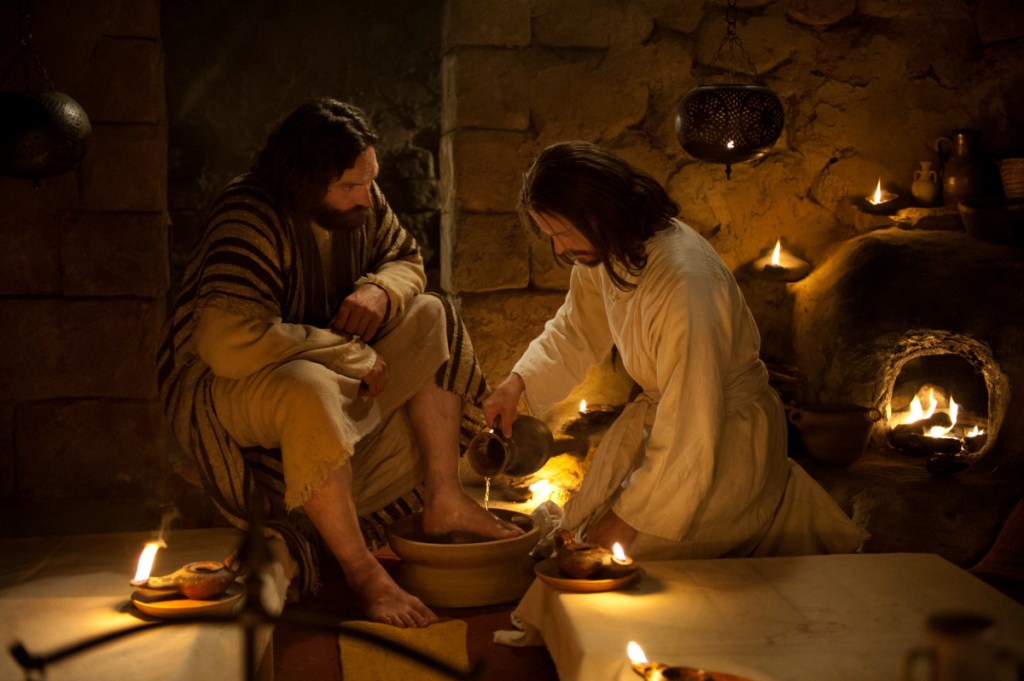
Imagine a church where we compete to outdo honouring each other! Honour that goes beyond thoughts and words to powerful, thoughtful, impactful actions. A church where the congregation honours their leaders in their presence, as well as in their absence. A church where leaders honour their congregation just as Jesus honoured His disciples by not only empowering them (Luke 9:1-2), but serving them (washing their feet) (John 13:1-17).
I should add that the honour we give should not be based on economic status or social standing, as James 2:1-7 admonishes, but on the truth that we are all bought with the precious blood of Jesus Christ (1 Peter 1:18-19). If someone is worth the very blood of Jesus, then who are we to dishonour them?
I pray that God will give us the grace to show honour to those in authority, our parents, the church and to all. Even when it is hard. Especially when it is hard. May we learn to seek God’s will first before acting, reacting, speaking. I pray that we receive the Spirit of discernment to know what God wants us to do, and the grace and capacity to obey, irrespective of whether or not it aligns to what our flesh wants to do. In doing so, may the God who always keeps His promises, and who is able to do more than we can ever think, ask or imagine, engrace us, empower us and take great delight in honouring us. Amen.
*A good explanation for Luke 14:26 can be found here.
Image source here.

 LivLearns.Life
Leave a comment