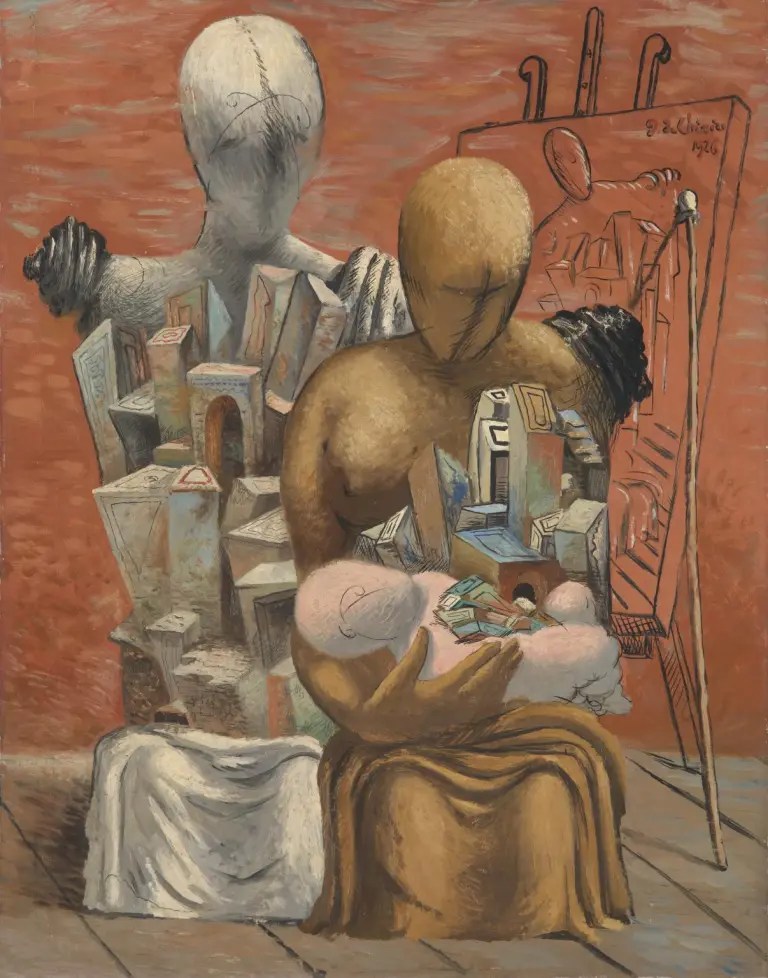
“The heart of a father is the masterpiece of nature,” Antoine Francois Prevost once wrote. In a sense I agree, as to have the true heart of a father is “a work of outstanding artistry, skill or workmanship.” In other words, the definition of a masterpiece, which Google kindly provided for me. God has the ultimate heart of the Father, and as humans, we can learn from His example and emulate His heart.
God’s heart is one of love and compassion (Luke 15:20), a heart that intimately knows His children (Psalm 139, Matthew 6:8), a heart that is faithful despite our actions (2 Timothy 2:13), a heart that devices good plans for His children’s future (Jeremiah 29:11). God is a Father who carries us (Deuteronomy 1:29-31), shapes us (Isaiah 64:8), defends us and keeps us safe (Psalm 18:2, 62:5-7, 94:22), disciplines us (Proverbs 3:11-12, Hebrews 12:6, Revelation 3:19), comforts us (2 Corinthians 1:3-4), sustains us (Psalm 55:22) and provides for us (Genesis 22:14, Philippians 4:19). He is a Father who is present (Joshua 1:9, Psalm 46:1, Matthew 28:20).
There are some men who have worked towards exemplifying the heart of a father, and I would like to take this time to appreciate them. To say thank you to every man who genuinely has the heart of a father. It is not something that just comes by magic, it takes intentionality, sacrifice, outstanding workmanship to develop such a heart, and you have worked towards doing so, so thank you.
I would also like to say a big thank you to my dad, who has taught me a whole lot, motivated me, pushed me to do better and be better, provided, protected me, and who has been present. May God bless and richly reward you.
Fathers and father figures are very important in a child’s life. You only have to look at the statistics showing outcomes for children from homes without a father or father figure to know how true this is. Sadly, despite most of us knowing this, the statistics on children growing up without a father are getting even more distressing. Even for the children who grow up with their fathers, if we really drilled it down to children with fathers that actually spend quality time with them, one can only wonder what story that will tell. By this I mean fathers who not only provide, but take the time to know their children, to nurture, train, support, teach, discipline, influence and have fun with them. Fathers who mould their children, passing on their wisdom, values, insights, lessons from mistakes, legacies, networks, reputation, stories of how God has worked in their lives. Fathers who “don’t make their children bitter about life” (Ephesians 6:4, GWT). Fathers who are truly present in their children’s lives. Fathers who genuinely have a father’s heart, drawing their children closer to our Father in Heaven.
Recently, while studying the book of 1 Samuel, I re-read the story of Eli the priest. As far as priestly duties were concerned, there are no indications that Eli was doing anything wrong. He seemed to have a kind heart too. He noticed a young woman in distress, Hannah, and prayed for her, and God indeed answered that prayer. However, God was not pleased with Eli, as we read in 1 Samuel 2. God’s anger against Eli was so serious that He said, “The time is coming when I will put an end to your family, so it will no longer serve as my priests. All the members of your family will die before their time. None will reach old age. You will watch with envy as I pour out prosperity on the people of Israel. But no members of your family will ever live out their days. The few not cut off from serving at my altar will survive, but only so their eyes can go blind and their hearts break, and their children will die a violent death. And to prove that what I have said will come true, I will cause your two sons, Hophni and Phinehas, to die on the same day!” (vs 31-34, NLT). Reading this, you might be thinking, ‘why such a harsh punishment?’, ‘what did Eli do that grieved God so much?’
The answer to that can be found earlier in the passage. Eli’s sons were “scoundrels who had no respect for the Lord” (v. 12). They treated the Lord’s offerings with contempt (v.17), and they seduced the young women who assisted at the entrance of the Tabernacle (v. 22). Eli knew about all this (v.22) but did not properly discipline them. Yes he told them off, but it was a bit too late, they were already adults. This begs the questions, ‘What kind of father was he when they were children? How did he bring them up?’ It is interesting that apart from this issue regarding his sons, there doesn’t seem to be anything else mentioned against Eli in the Bible, so it is safe to assume he was a good priest. And yet God was so angry with him and punished him and his lineage severely, because of his failures as a father. This sad story holds a very serious lesson – our roles, callings, jobs, etc do not exempt us from the calling of parenthood. Even if our role is that of a priest, as in Eli’s case. Yes our jobs allow us to provide for our children, but they do not give us a pass for all the other functions that fathers are called to carry out. A father’s role as a provider does not give him a get-out-of-parenting free card.
Sadly, Eli’s case doesn’t end with him and his sons. We see that his story repeated itself in Samuel’s household. In 1 Samuel 8:1-5 (NLT), we read that “As Samuel grew old, he appointed his sons to be judges over Israel. Joel and Abijah, his oldest sons, held court in Beersheba. But they were not like their father, for they were greedy for money. They accepted bribes and perverted justice. Finally, all the elders of Israel met at Ramah to discuss the matter with Samuel.“Look,” they told him, “you are now old, and your sons are not like you. Give us a king to judge us like all the other nations have.””
This was a heartbreaking pattern, and patterns go on and on if they are not broken. There was no doubt that Samuel was called by God (1 Samuel 3). Plus God had used him to do extraordinary things, as we read about in 1st and 2nd Samuel. And yet, his failure in his calling of parenthood was what eventually led the Israelites to demand a king, despite the warnings Samuel gave them about what a king would do (vs 10-19), warnings which did indeed come to pass. It makes me wonder, were Samuel’s sons so bad that all this was preferable to having them rule over Israel?
I guess one could argue that Samuel did not have a good earthly role model of fatherhood to learn from, seeing as he grew up under Eli. In such scenarios, how can the pattern be broken? How can the cycle be stopped for children who find themselves in such scenarios, such that they can come off that cycle and start a new one?
Having the heart of a father is not limited by biology. Afterall, we are all adopted sons and daughters of God (Romans 8:15, Galatians 4:5). In these situations therefore, how can men with hearts of fathers step up to break cycles, both in and beyond their biological unit?
Mentoring and living an exemplary life are key ways in which men can do this. There are several examples of mentoring relationships in the Bible. Some were short term and/or for a specific purpose. Others were longer term. An often cited example is that of Paul and Timothy. Timothy’s mother was a Jewish believer, but his father was Greek (Acts 16:1-3). As far as I know, the Bible does not explicitly state his father’s faith status, but it does say this about Timothy’s mother and grandmother: “I remember your genuine faith, for you share the faith that first filled your grandmother Lois and your mother, Eunice. And I know that same faith continues strong in you. This is why I remind you to fan into flames the spiritual gift God gave you when I laid my hands on you” (2 Timothy 1:5-7). It is safe to assume that Timothy was able to do great exploits for God thanks in part to key people in his life who raised him and mentored him – his mum, grandmother and Paul. Other examples of mentors and mentees were Elijah and Elisha (1 Kings 19, 2 Kings 2), Ruth and Naomi (The Book of Ruth), Moses and Joshua (Exodus 24:13-14, Joshua 1:1-5), and of course Jesus and His disciples (Matthew 4:19, in fact the Gospels as a whole!).
As Christians, mentoring or not, we are called to live an exemplary life. Primarily for God’s glory, but with the added bonus that there are people watching us, especially young people who need role models. “Therefore, since we are surrounded by so great a cloud of witnesses, let us also lay aside every weight, and sin which clings so closely, and let us run with endurance the race that is set before us” (Hebrews 12:1). We therefore have a calling to live lives that can allow us to boldly proclaim, “Keep putting into practice all you learned and received from me—everything you heard from me and saw me doing. Then the God of peace will be with you” (Philippians 4:9, NLT). That is not a statement one can honestly make if one’s life is not truly aligned to God’s will. In other words, do as I say AND do. May we have the kind of faith that young people in our families and communities can confidently imitate (Hebrews 13:7, Titus 2:2), sharing not just the gospel of Christ, but our own lives (1 Thessalonians 2:8).
Mentoring is a topic on its own, so covering it in detail here would be quite a task (and make this blog post really long!). There are a few points about mentoring I can touch on though. In a mentoring relationship, it is crucial to be guided by prayer, and to ensure that there are strong guardrails to protect both the mentor and the mentee. Sometimes such relationships can break down. Barnabas mentored Paul when Paul became a new Christian (Acts 9:26-31), but they parted ways at some point (Acts 15:36-41), although they still respected each other (1 Corinthians 9:6). It is also important to note that mentoring requires mutual action and commitment. Both parties have roles to play. Joshua fought as Moses ordered, Moses held up his hands to ensure Joshua and Israel’s success (Exodus 17:8-16). Elisha had to stubbornly insist on accompanying Elijah to get Elijah’s anointing (2 Kings 2). The disciples stayed close to Jesus and obeyed Him (John 14:15-24; John 15, Luke 24:49-53, Acts 2). Mentoring is key to ensuring the continuity of our faith and for the building of the church and better communities. It allows generations after us benefit from our wisdom, glean from our experience, and avoid our mistakes. It is important for us all, but especially for those who need Godly parental figures in their lives.
I pray that God will give us the grace to reach out to, and lift up young people in our society, especially those who really need Godly role models. May we have the eyes to see and reach out to those in need of such mentors and father figures. I pray that we will have the grace, strength, wherewithal to show them what the heart of a father is like, to allow them experience the love and presence of a father, even when one is lacking in their lives, and to pass on the torch of our faith. Above all, may we all remember that we have a Father who can give us so much more than any earthly Father can, and may this knowledge fill us with courage, boldness, grace, and a heart to follow Him and trust in Him always. Amen.
Image source here, Giorgio de Chirico, The Painter’s Family, 1926.
And a beautiful song to celebrate Our Heavenly Father and the intimacy we can share with Him, “My Daddy, My Daddy“

 LivLearns.Life

Leave a comment