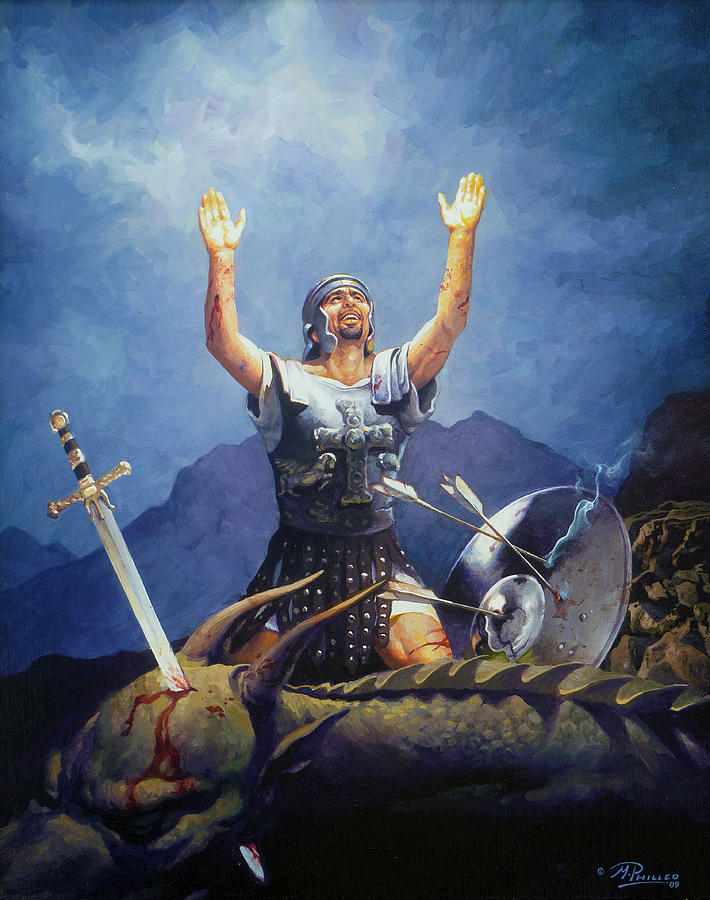
Recently I was reading the story of Samson, the part where he killed 1,000 Philistines with the jawbone of a donkey. Something happened shortly after this victory that intrigued me. “Samson was now very thirsty, and he cried out to the Lord, “You have accomplished this great victory by the strength of your servant. Must I now die of thirst and fall into the hands of these pagans?” (Judges 15:18, NLT).
Samson’s experience got me thinking about post-victory moments. I realised that quite a few Bible characters experienced various degrees of want, sadness, frustration after significant victories. These include spiritual, emotional or physical wants. Given that we normally associate victories with celebration, joy, laughter, this may seem odd. However, the phenomenon of ‘the low after the high’ is not an unusual one. It isn’t now, and it wasn’t in Biblical times. In addition to Samson, other Bible characters experienced this.
Elijah’s story is a well known one. He famously called for The Mount Carmel Contest – God Almighty versus Baal (1 Kings 18). There is no doubt that Elijah was completely assured of God’s power, otherwise he won’t have even called for such a contest, never mind mock the king’s choice of god. Verse 27 makes me smile, “And at noon Elijah mocked them, saying, “Cry aloud, for he is a god. Either he is musing, or he is relieving himself, or he is on a journey, or perhaps he is asleep and must be awakened” (ESV). Elijah sounds like a fairly confident man doesn’t he? Not only that, when it is his turn to call on his God, Elijah pours water all over the offering, the wood, even filling the trench, which should make things tricky for an answer of fire. Of course we know that God truly answers by fire and consumes every single thing, even the water and the dust! Elijah then goes further to call for the seizing and slaughter of the prophets of Baal, cementing this victory.
So, Elijah has multiple great victories in a short space of time – he has called down fire from Heaven, convinced the people that God is the One True God, established himself as a prophet of this God, cleansed the land of false prophets and false gods. He even got special strength to run ahead of the king’s chariot! He should be on cloud nine following this, shouldn’t he? Alas, not so. In the next chapter, Jezebel finds out what has happened and vows to kill him. After slaughtering 450 prophets, surely one woman won’t make a mighty prophet of God quake in his boots? And yet, what happened next? “Elijah was afraid and fled for his life. He went to Beersheba, a town in Judah, and he left his servant there. Then he went on alone into the wilderness, traveling all day. He sat down under a solitary broom tree and prayed that he might die. “I have had enough, Lord,” he said. “Take my life, for I am no better than my ancestors who have already died.”” (1 Kings 19:3-4, NLT). What?! Where did Elijah’s confidence in God disappear to? However, aren’t we like that sometimes? Forgetting the amazing things God has done when a new challenge crops up in our lives. Truly, this shows that Elijah was a man just like you and I (James 5:17).
One beautiful lesson from this story is that during Elijah’s vulnerable moment, God does not condemn him for feeling this way. Instead God sends an angel to give Elijah some food, water, a chance to rest, and some more food. God recognises that Elijah will have some tough times ahead and wants to make sure that he is well nourished. He nourishes Elijah, not only with physical food, but with the strength and reassurance that comes from hearing the voice of God, and receiving direction from God on the next steps to take.
Jonah’s story is slightly different from the rest, as he is a reluctant victor. He ran away from God’s calling, literally going in the opposite direction. Eventually though, after God arrested him in dramatic fashion, he grudgingly obeyed God. He went to Nineveh, delivered the word from God that subsequently led to repentance, and an entire city was saved. It was a very short sermon/prophecy, and yet it led to thousands of people being convicted of their sin and repenting (Jonah 3:3-10). Most of us would call that a fruitful and successful sermon, wouldn’t we? Yet Jonah is not happy. In Jonah 4:3 (NLT), he says “Just kill me now, Lord! I’d rather be dead than alive if what I predicted will not happen.” Granted there were additional reasons for his anger, His failure to understand God’s merciful character being one. However, I have included his story because it shows how it is possible to be completely blind to a victory God has wrought through us, and instead focus on grievances we may have, majoring on minors. Jonah was highly upset because his prediction had not come true. He completely ignored the fact that God’s word spoken through him was so effective, it led to immediate repentance of multitudes, including the king of Nineveh. Without that warning, an entire city may have been destroyed. Yet, he was more upset about the death of a plant than the potential destruction of over a hundred thousand people and animals (Verses 10-11). It reminds me of Jesus’ words to the Pharisees in Matthew 23:24 (NLT), “Blind guides! You strain your water so you won’t accidentally swallow a gnat, but you swallow a camel!”
Again, another beautiful lesson is that God patiently shows Jonah His heavenly perspective. This lesson is for us all, as we can be like Jonah sometimes – sulkers in need of a good dose of God’s perspective. Furthermore, God uses the whole incident to re-emphasise key aspects of His character to Jonah – His concern for people and for justice, His abundant mercy and forgiving heart. May God give us the wisdom and perspective to see things like He does, and may He continue to reveal Himself and His character to us.
These stories and others teach us that after victorious moments, we can be vulnerable to weakness, fatigue, dependence on our strength and to pride. Some may not like how the victory happened and dwell on that. Others may go down the path of nit-picking their victory moments, revisiting any possible mistakes made and agonising over them, no matter how insignificant. There can also be a feeling of crashing, of going from a high to a low point. A bit like getting to a mountain summit, and then realising it’s all downhill afterwards. Or the looming question of “what’s next?”, as the victorious try to avoid becoming one-hit wonders.
Pride as a result of a victory can cause us to do things that we really shouldn’t, as was the case with King Amaziah in 2 Kings 14:1-14. He refused to listen to advice and ended up soundly defeated. Victorious moments can also put us on the enemy’s radar, and sadly cause jealousy to cast its evil eye on us. David’s victory over Goliath and the accompanying praise He received for it led to a death warrant on His life, as a result of jealousy. The warrant was issued by King Saul, the very same person who was supposed to be rewarding him for the victory! (1 Samuel 17:25; 18:9). Some of these challenges may be tricky to avoid, like in David’s case. This is because we are not in control of other people’s reactions to our victories. However, for the others, there are actions we can undertake, some of which are outlined below:
Recognising that God is the constant, the source, the reason.
In Philippians 4:11-13, Paul states the secret of abounding and being abased – being content in God regardless of circumstances, and recognising that the things he does, he does them through Christ. It is Christ who gives all the strength, the ability, the victories.
This is why it is crucial that our focus remains resolutely on God, our faces set like flints, whether we are victorious or vulnerable. Once we find ourselves pre-occupied with thoughts of our victory more than thoughts of God, we need to be on guard, as we are heading into risky territory. This does not mean that we don’t celebrate victories, far from it. God is a big advocate of celebrations. However, even in the celebrations, our focus should be on what God has done through us. As vessels, we should bear in mind that our Potter can use whichever vessel He wants, for whichever purpose He desires (Romans 9:20-21). We are vessels sold out for His use – He decides, we submit. “Does not the potter have the right to make out of the same lump of clay some pottery for special purposes and some for common use?” (Verse 21, NIV). Remember that the vessels which carried water used to wash hands, feet et al became vessels used to carry the best wine ever tasted. Not to mention partakers of Jesus’ first miracle on Earth at the marriage feast in Cana (John 2:1-12). It is fairly likely that they went back to being used as jars for Jewish ceremonial washing afterwards. We can learn a thing or two from those jars… “Yet we who have this spiritual treasure are like common clay pots, in order to show that the supreme power belongs to God, not to us” (2 Corinthians 4:7, GNT).
These vulnerable moments can serve a good purpose. They are pointers to the fact that our sufficiency, our competence, our qualification comes from God (2 Corinthians 3:5). This makes them vital in shattering any illusions we may have built up in our minds of what wonderful jars we are, and consequently shattering seeds of pride. It is true that we are wonderful jars indeed, make no mistake about that. But only because God Himself made us so. The praise should go to the artist, not just the artwork.
In such moments, it is also worth remembering that our one constant is God. He loves us in the victories, He loves us in the vulnerable moments. Our victories do not shape His love for us. His is a steadfast, unwavering love. It is also reassuring to know that He does not abandon His own during such moments. Instead He meets our needs. Sometimes He uses the most unlikely channels, whether that be water from a hollow in the ground to quench Samson’s thirst (Judges 15:19), or an angel, as in Elijah’s case (1 Kings 19:5). Irrespective of the channels, we can be sure that He will come through for us. He does not condemn us, even if our insecurities cause us to condemn ourselves. Instead He continues to uphold us and to shape us into the vessels He has called us to be.
Watching and Praying yet the more
It may be tempting to think that after a long-standing prayer request has been answered and we have secured a major victory, we can spend less time on prayer. If ever such a thought comes to your mind, imagine that the thought is holding a large placard with the words “FOOLISH DECISION” on it. We need to continue to watch and pray, and to be on guard. “Watch and pray, lest you enter into temptation. The spirit indeed is willing, but the flesh is weak” (Matthew 26:41, NKJV). We have many examples to learn from, “Therefore let anyone who thinks that he stands take heed lest he fall” (1 Corinthians 10:12). “Stay alert! Watch out for your great enemy, the devil. He prowls around like a roaring lion, looking for someone to devour” (1 Peter 5:8, NLT). The devil does not take a holiday just because we have secured a major victory. If anything, he gets even angrier, like a wounded lion on a revenge mission.
In Psalms 59, 52, 34, as well as others, we read of David’s prayers to God when Saul was bent on killing him, after his great victory. He continued to trust, pray, and worship God despite all. And God answered him, as Psalm 18 testifies.
When we’ve ‘emptied’ ourselves out in service to God and virtue has gone out of us, we can count the fruitfulness of that service as a victory – whether that be preaching a sermon or ministering to someone’s needs. In order to remain effective for God, we need refilling and refreshing. Rest, food and water are important, as mentioned earlier. Even more important though are spiritual food (the Word of God) and water (The Spirit of God). Some churches have a practice of praying for teachers/pastors after a sermon, which is a valuable practice.
Jesus had multiple daily victories, and what did he do afterwards? He prayed, sometimes all night (Luke 6:12; 21:37). After a day full of amazing miracles – healing the sick, feeding the 5000 with five loaves and two fish, Matthew 14:23 records that “He went up on a mountainside by himself to pray”. Like Jesus, our ideal example, we should make it a habit to humbly come before God in prayer. May we not attempt to carry out God’s work in a situation where the Holy Spirit has left the building, thinking that we can keep going on our own strength. James 4:8 says, “draw near to God, and He will draw near to you.” As we draw near to God and spend time in prayer, we are revitalised. For God is The One who “refreshes the weary soul and replenishes all who are weak” (Jeremiah 31:25, BSB). As we pray, God can also reveal next steps we can take, so that we don’t become wondering wanderers.
Humbly returning to our God-assigned duty post
After a victory, we need periods of rest. We may even have injuries that we need to tend to. However, having done so, returning to our duty posts is essential. In 2 Samuel 10, David defeated Ammon and Syria. In the next chapter, when other kings went to battle, he went to face a different kind of battle, the lust of the eye. In summary, he lost, sinking so low that even he did not recognise himself in the story (2 Samuel 12). This sadly led to a chain of events that cost David so so much.
In Judges 20, the Israelites were fighting against the Benjamites. The Benjamites had defeated them over and over. Coasting on this victory, the warriors of Benjamin made a classic mistake, resting on their laurels. Verse 32 records that “the warriors of Benjamin shouted, “We’re defeating them as we did before!” However it was a trap, and the Benjamites were soundly defeated.
Mordecai on the other hand had a different experience. Mordecai was on duty at the king’s gate when he uncovered a plot to assassinate the king. Sometime afterward, as a reward, he experienced a great victory – the indisputable honour of the king, in grand, show-stopping style. Haman, a real life hater, had to parade Mordecai on the king’s horse through the city square, shouting, “This is what the king does for someone he wishes to honour!” (Esther 6:6-11). That must have been quite a victorious moment for Mordecai. And yet what did he do afterwards? Verse 12 states that afterwards Mordecai returned to his duties at the king’s gate. He knew he had to be even more wary. That was not the time to sit back, relax and gloat over Haman’s humiliation. His duties at the king’s gate gave him a vantage point and access to all sorts of information. He was wise enough to not lose sight of that. May we exhibit such wisdom as well.
I pray that as we continue to experience and celebrate great victories in our service to God, we will remember that it is for God, with God, by God that we secure these victories. He is our victory banner, our Jehovah-Nissi. May we continually dwell in God’s presence, experiencing His refreshing in the place of prayer. I pray that we will be true soldiers for the cross, on guard and steadfast at our posts. May we never lose sight of God’s Heavenly, all-encompassing perspective and the knowledge of who our God is – a loving Father who never wavers in His love for His children, and who delights in the victories we accomplish in His glorious name.
Image source here.

 LivLearns.Life

Leave a comment